3-3-3 Rule for Anxiety Seattle: 5 Powerful Steps to Calm Panic Fast
When anxiety strikes in Seattle’s fast-paced tech culture, you need quick relief. Learn the science-backed 3-3-3 rule that mental health professionals use to stop panic attacks in their tracks.

You’re sitting in traffic on I-5, heart racing. Or maybe you’re in a meeting at Amazon, and suddenly your chest tightens. Anxiety doesn’t wait for a convenient time to strike—but the 3-3-3 rule for anxiety can help you regain control in less than 60 seconds.
At Seattle Wellness Center, we teach clients evidence-based grounding techniques like the 3-3-3 rule as part of comprehensive anxiety treatment. This simple yet powerful strategy uses your senses to interrupt anxious thought patterns and bring you back to the present moment.
Whether you’re experiencing generalized anxiety disorder (GAD), panic attacks, or stress-related anxiety from Seattle’s demanding work culture, mastering this technique can give you immediate relief when you need it most.
What Is the 3-3-3 Rule for Anxiety?
The 3-3-3 rule is a grounding technique used to manage acute anxiety and panic attacks by engaging your senses and redirecting your focus to the present moment. Also known as the “3-3-3 grounding technique,” it helps interrupt the fight-or-flight response that fuels anxiety symptoms.
🔬 Research Insight
Grounding techniques like the 3-3-3 rule are supported by cognitive behavioral therapy (CBT) research. A study published in the Journal of Anxiety Disorders found that sensory grounding techniques significantly reduced acute anxiety symptoms in 73% of participants within 2-3 minutes of practice.
Source: Kabat-Zinn, J. (2003). “Mindfulness-Based Interventions in Context.” Clinical Psychology: Science and Practice, 10(2), 144-156. American Psychological Association
The technique works by activating your parasympathetic nervous system—the body’s natural “calm down” response—counteracting the stress hormones that trigger anxiety symptoms like rapid heartbeat, shallow breathing, and racing thoughts.
Why the Number 3 Works
Psychologists have discovered that the “rule of 3” is particularly effective for several reasons:
- Cognitive ease – Our brains naturally process information in groups of three
- Memorable – Three steps are easy to remember during high-stress moments
- Quick enough to interrupt anxiety – Takes only 1-2 minutes to complete
- Engages multiple senses – Shifts focus from internal worry to external reality
The 3-3-3 Rule: Step-by-Step Instructions
When you feel anxiety rising—whether you’re stuck in Seattle traffic, facing a deadline at work, or experiencing a panic attack at home—follow these three simple steps:
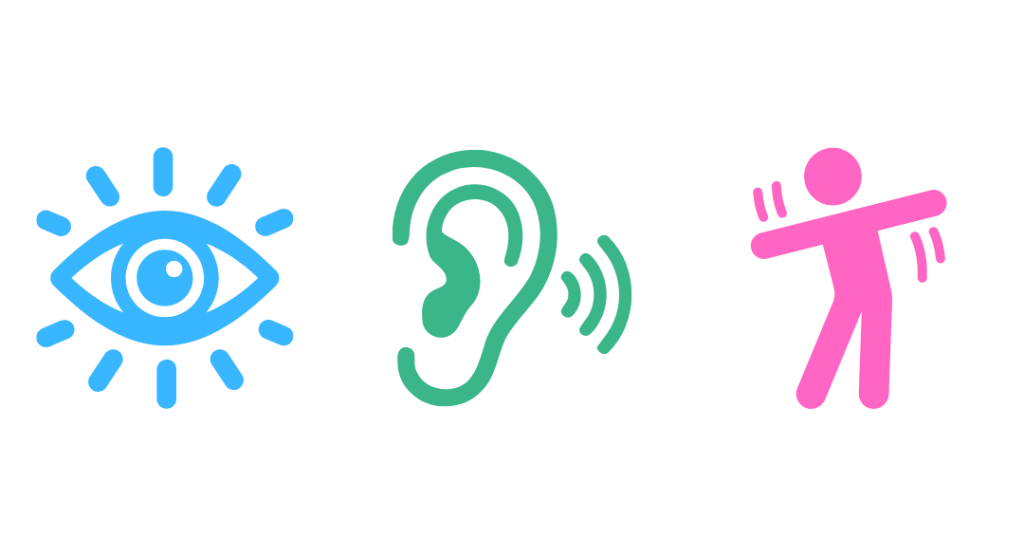
👁️ Step 1: Name 3 Things You Can See
Look around your environment and identify three objects you can see. Say them out loud or silently in your mind. Be specific:
- “I see a blue coffee mug on my desk”
- “I see the Space Needle through the window”
- “I see my laptop screen showing an email”
Why this works: Naming objects forces your brain to engage with your surroundings rather than staying trapped in anxious thoughts. The visual cortex activates, pulling attention away from the amygdala (your brain’s fear center).
👂 Step 2: Identify 3 Sounds You Can Hear
Close your eyes if comfortable, and tune into your auditory environment. Name three distinct sounds:
- “I hear cars passing on the street below”
- “I hear my own breathing”
- “I hear rain tapping on the window” (very Seattle!)
Why this works: Listening engages a different sensory pathway, further disrupting the anxiety loop. Even subtle sounds—your heartbeat, distant traffic, a clock ticking—can anchor you to the present.
🤸 Step 3: Move 3 Body Parts
Intentionally move three different body parts. Make the movements deliberate and notice the sensation:
- Rotate your wrists slowly
- Roll your shoulders back
- Wiggle your toes inside your shoes
Why this works: Physical movement activates your proprioceptive system (body awareness) and releases tension held in your muscles. This can interrupt the freeze response common in anxiety.
💡 Key Takeaway
The 3-3-3 rule takes only 1-2 minutes and can be done anywhere—in your car, at your desk, or during a meeting. No one even needs to know you’re using an anxiety technique. It’s completely discreet and immediately effective.
When to Use the 3-3-3 Rule for Anxiety
The 3-3-3 grounding technique is most effective for acute anxiety symptoms. Use it when you’re experiencing:
- Panic attacks – Racing heart, shortness of breath, feeling of impending doom
- Overwhelming worry – Racing thoughts that won’t stop
- Pre-presentation anxiety – Before a big meeting or public speaking
- Social anxiety – At networking events or gatherings where you feel uncomfortable
- Stress spirals – When one worry triggers another and another
- Seattle-specific triggers – Traffic anxiety on I-5, seasonal affective disorder (SAD) during dark winters, tech industry deadline pressure
Seattle Tech Culture & Anxiety
Seattle’s competitive tech industry creates unique anxiety triggers. Many Amazon, Microsoft, and startup employees experience “hustle culture” burnout, imposter syndrome, and constant pressure to perform. The 3-3-3 rule can be especially useful during high-stress work moments when you need immediate relief but can’t leave your desk.

5 Powerful Enhancements to the Basic 3-3-3 Rule
While the standard 3-3-3 rule is highly effective, you can enhance it with these research-backed additions:
1. Add Deep Breathing Between Steps
After each set of three (see, hear, move), take one deep breath: inhale for 4 counts, hold for 4, exhale for 6. This activates your vagal nerve, triggering the relaxation response.
2. Describe Objects in Detail
Instead of just “I see a mug,” say “I see a blue ceramic mug with a chip on the handle.” More detailed descriptions require more cognitive engagement, leaving less mental space for anxiety.
3. Add Touch: Name 3 Textures
After the visual, auditory, and movement steps, add: “I feel the smooth surface of my phone, the soft fabric of my sweater, the cool metal of my keys.” Touch is one of the most powerful grounding senses.
4. Practice During Calm Moments
Don’t wait for anxiety to strike. Practice the 3-3-3 rule twice daily when you’re calm. This builds neural pathways, making the technique more automatic and effective when you actually need it.
5. Combine with Progressive Muscle Relaxation
After completing the 3-3-3 rule, spend 30 seconds tensing and releasing muscle groups: squeeze your fists tight, then release; tense your shoulders up to your ears, then drop them. This releases physical tension that accompanies anxiety.
🔬 Research Insight
According to the American Psychological Association, grounding techniques combined with deep breathing can reduce anxiety symptoms by up to 60% within 5 minutes. These techniques work by engaging the prefrontal cortex (logical thinking) and reducing activity in the amygdala (fear center).
Source: American Psychological Association. (2024). “Stress Management Techniques.” APA.org/topics/stress
How Seattle Wellness Center Teaches the 3-3-3 Rule
At Seattle Wellness Center, we incorporate the 3-3-3 rule and other evidence-based grounding techniques into comprehensive anxiety treatment. Our licensed therapists specialize in:
- Cognitive Behavioral Therapy (CBT) – Addressing the thought patterns that fuel anxiety
- Mindfulness-Based Stress Reduction (MBSR) – Teaching present-moment awareness
- Exposure therapy – Gradually facing fears in a safe environment
- Trauma-focused approaches – For anxiety rooted in past experiences
We serve individuals across the Seattle area from our Northgate location, offering both in-person and telehealth therapy options. Whether you’re dealing with generalized anxiety disorder, panic attacks, social anxiety, or stress from Seattle’s demanding work culture, our compassionate team can help.
Why Choose Seattle Wellness Center for Anxiety Treatment?
- Experienced therapists licensed in Washington State with specialized anxiety training
- Evidence-based approaches proven to reduce anxiety symptoms
- Convenient Northgate location with free parking and easy I-5 access
- Telehealth options for flexible, accessible care anywhere in Washington
- Understanding of Seattle culture – We get the unique stressors of living and working in the Pacific Northwest
- We accept most major insurance to make anxiety treatment affordable

Ready to Take Control of Your Anxiety?
The 3-3-3 rule is a great start, but comprehensive therapy provides lasting anxiety relief. Our Seattle therapists can teach you personalized coping strategies.
📞 (206) 636-1982
Frequently Asked Questions About the 3-3-3 Rule
Click each question to expand the answer:
Does the 3-3-3 rule work for panic attacks?
Yes, the 3-3-3 rule is particularly effective for panic attacks. By engaging your senses and grounding you in the present moment, it interrupts the panic cycle. However, it works best when combined with slow, deep breathing. If you experience frequent panic attacks, professional therapy can teach you additional techniques and address underlying causes.
How long does it take for the 3-3-3 rule to work?
Most people feel noticeable relief within 1-3 minutes of completing the 3-3-3 rule. For severe anxiety or panic attacks, you may need to repeat the technique 2-3 times. The more you practice during calm moments, the faster and more effective it becomes during anxious episodes.
Can I use the 3-3-3 rule for social anxiety?
Absolutely. The 3-3-3 rule is discreet enough to use in social situations without anyone noticing. Before entering a networking event or during an uncomfortable conversation, quietly name three things you see, three sounds you hear, and subtly move three body parts. This can help calm pre-social anxiety and keep you present during interactions.
What if the 3-3-3 rule doesn’t work for me?
If the 3-3-3 rule isn’t effective, try these alternatives: the 5-4-3-2-1 grounding technique (name 5 things you see, 4 you can touch, 3 you hear, 2 you smell, 1 you taste), box breathing (inhale 4 counts, hold 4, exhale 4, hold 4), or progressive muscle relaxation. If anxiety significantly impacts your daily life, professional therapy at Seattle Wellness Center can provide personalized strategies.
Is the 3-3-3 rule a replacement for therapy?
No. While the 3-3-3 rule is an excellent tool for managing acute anxiety symptoms, it doesn’t address the root causes of anxiety disorders. Comprehensive therapy—like CBT or MBSR—helps you understand anxiety triggers, change thought patterns, and develop long-term coping skills. Think of the 3-3-3 rule as first aid, and therapy as ongoing treatment.
Can kids use the 3-3-3 rule?
Yes! The 3-3-3 rule is simple enough for children age 6 and up to learn. Make it fun by turning it into a game: “Can you find three blue things in the room?” or “What three sounds do you hear right now?” For younger children, simplify to just one sense at a time.
Additional Anxiety Resources for Seattle Residents
Beyond the 3-3-3 rule and professional therapy, these resources can support your mental health:
- American Psychological Association – Anxiety Resources – Evidence-based information about anxiety disorders
- National Institute of Mental Health (NIMH) – Research and statistics on anxiety
- Anxiety and Depression Association of America (ADAA) – Support groups and educational materials
- King County Mental Health Resources – Local crisis support: 206-461-3222 or 1-866-427-4747
- 988 Suicide & Crisis Lifeline – 24/7 support for mental health crises
Get Professional Support for Lasting Anxiety Relief
You don’t have to manage anxiety alone. Our Seattle therapists are here to help you build confidence, reduce stress, and enjoy life again.
Seattle Wellness Center – Northgate
Serving all of King County | Telehealth Available
📞 (206) 636-1982
About This Article: This guide to the 3-3-3 rule was written by the clinical team at Seattle Wellness Center to provide practical anxiety management techniques. This information is educational and not a substitute for professional mental health care. If you’re experiencing severe anxiety or panic attacks, please contact a licensed therapist.
Last Updated: February 2026
Medical Review: Content reviewed by licensed mental health professionals at Seattle Wellness Center
References: American Psychological Association, Journal of Anxiety Disorders, Clinical Psychology: Science and Practice
